
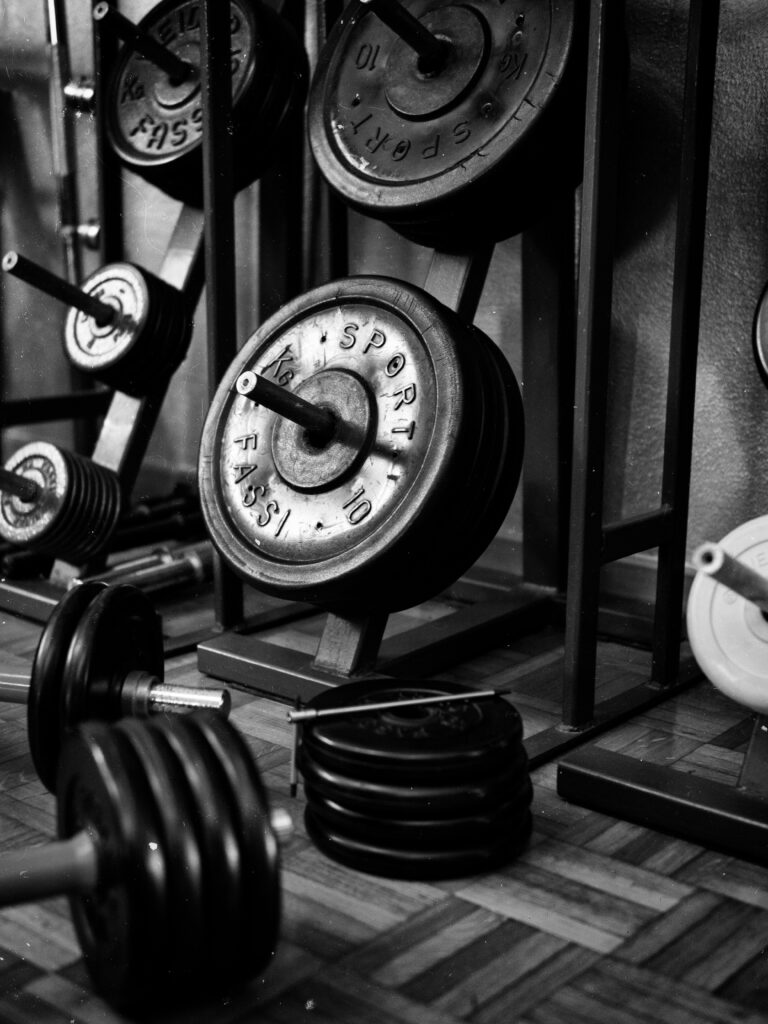
Torn between free weights and machines at the gym? We break down the pros and cons of each so you can make the smartest choice for your goals.
Walk into any gym and you’ll see two very different worlds: one side filled with barbells, dumbbells, and benches — the other with cables, pulleys, and weight stack machines. Both camps have passionate supporters. But which is actually better for building strength?
The honest answer: it depends on your goals, experience level, and what you’re training for. Here’s a fair breakdown of both.
Free Weights: Pros and Cons
Free weights include barbells, dumbbells, and kettlebells. They require you to stabilize the weight yourself, which recruits more muscle fibers overall.
Pros:
- Recruit stabilizer muscles, leading to more functional strength
- More versatile — one set of dumbbells can replace dozens of machines
- Better for compound movements (squats, deadlifts, rows, presses)
- Translate well to real-world movement
- Generally more efficient for full-body strength development
Cons:
- Higher risk of injury if form is poor, especially for beginners
- Require more coordination and body awareness
- Can be intimidating for new gym-goers
- Spotters may be needed for heavy pressing movements
Machines: Pros and Cons
Machines guide your movement along a fixed path, making them easier to use with less technical skill required.
Pros:
- Safer for beginners learning the movement pattern
- Easier to isolate specific muscles (great for targeting weak points)
- Useful for training around injuries
- Less setup time; easier to adjust load quickly
- Ideal for controlled, high-rep hypertrophy work
Cons:
- Fixed range of motion may not match everyone’s biomechanics
- Stabilizer muscles are less engaged
- Less functional carryover to daily life or sport
- Limited variety compared to free weights
What Does the Research Say?
Studies suggest that both produce significant strength and muscle gains, especially in beginners. The difference becomes more pronounced over time — free weight training tends to produce greater overall athleticism and functional strength, while machines can be highly effective for muscle hypertrophy (size).
The Smart Approach: Use Both
The most effective programs use a combination. Start a session with compound free-weight movements (when you have the most energy and focus), then finish with machine exercises to fatigue specific muscles safely.
Example Lower Body Session:
- Barbell Squat (free weight — compound)
- Romanian Deadlift (free weight — compound)
- Leg Press (machine — volume)
- Leg Curl (machine — isolation)
The Verdict
Neither is objectively better. Free weights are generally superior for building total-body strength and athleticism. Machines are excellent tools for isolation, volume, and safety. A smart program uses both strategically.